
7 Common Triggers That Can Increase the Need for TMJ pain treatment
- Fri Sep 11

Persistent aches and recurring movement problems can make everyday activities harder. You may have tried changing your routine, resting an irritated area, doing exercises, or working with a physiotherapist, yet the same symptoms keep returning. In these situations, a clinical assessment can help identify what is driving the problem and whether shockwave therapy belongs in your care plan.
At The Port Physiotherapy & Massage in Calgary, a shockwave therapy clinic consultation begins with an assessment rather than jumping straight into treatment. Shockwave therapy uses acoustic pressure waves applied to selected tissues. It is commonly used for several musculoskeletal conditions, including plantar fasciitis, Achilles tendon problems, tennis elbow, patellar tendon problems, calcific tendonitis, and some forms of hip-related pain.
If you are wondering whether this approach fits your situation, the following seven signs may indicate that it is time to discuss your symptoms with a qualified provider.
An occasional ache after unusual activity is not necessarily a reason to seek shockwave treatment. A different situation arises when symptoms remain for weeks or months despite changes in activity and a reasonable rehabilitation plan.
Persistent tendon or soft-tissue problems can involve changes in tissue structure, load tolerance, strength, or movement. A shockwave therapy clinic can assess the affected area and determine whether the presentation matches a condition for which shockwave therapy is commonly considered.
Tendon-related symptoms can be stubborn. Areas such as the Achilles tendon, patellar tendon, elbow tendons, and rotator cuff may become irritated with repeated loading.
If the same tendon problem keeps returning when you resume work, exercise, sport, or recreational activity, a Shockwave Therapy clinic assessment may be worth discussing. Shockwave therapy is used in physiotherapy for several tendinopathies, although suitability depends on the diagnosis and individual circumstances.
A clinician can first determine whether your symptoms actually come from the tendon or whether another structure may be involved. That distinction can prevent you from pursuing a treatment that does not match the source of the problem.
Plantar fasciitis is one of the conditions frequently associated with shockwave therapy. Heel discomfort may be noticeable with the first steps after getting out of bed, after prolonged sitting, or during walking and running.
If your heel symptoms have persisted and are interfering with daily activities, a Shockwave Therapy clinic consultation may help clarify your options. At The Port, shockwave treatment may be considered alongside physiotherapy, movement assessment, and exercise.
It is also important to confirm the cause of heel symptoms. Not every type of foot discomfort comes from plantar fascia irritation, so an assessment should come before treatment.
Tennis elbow, golfer’s elbow, and certain tendon-related shoulder conditions may cause discomfort with gripping, lifting, reaching, or repetitive tasks.
When these symptoms continue despite activity modification and rehabilitation, a Shockwave Therapy clinic can be one place to discuss whether acoustic wave treatment is appropriate.
When a musculoskeletal issue starts changing what you can do, it may be time to have the problem assessed. A Shockwave Therapy clinic consultation can help determine whether shockwave treatment should be part of a wider rehabilitation plan.
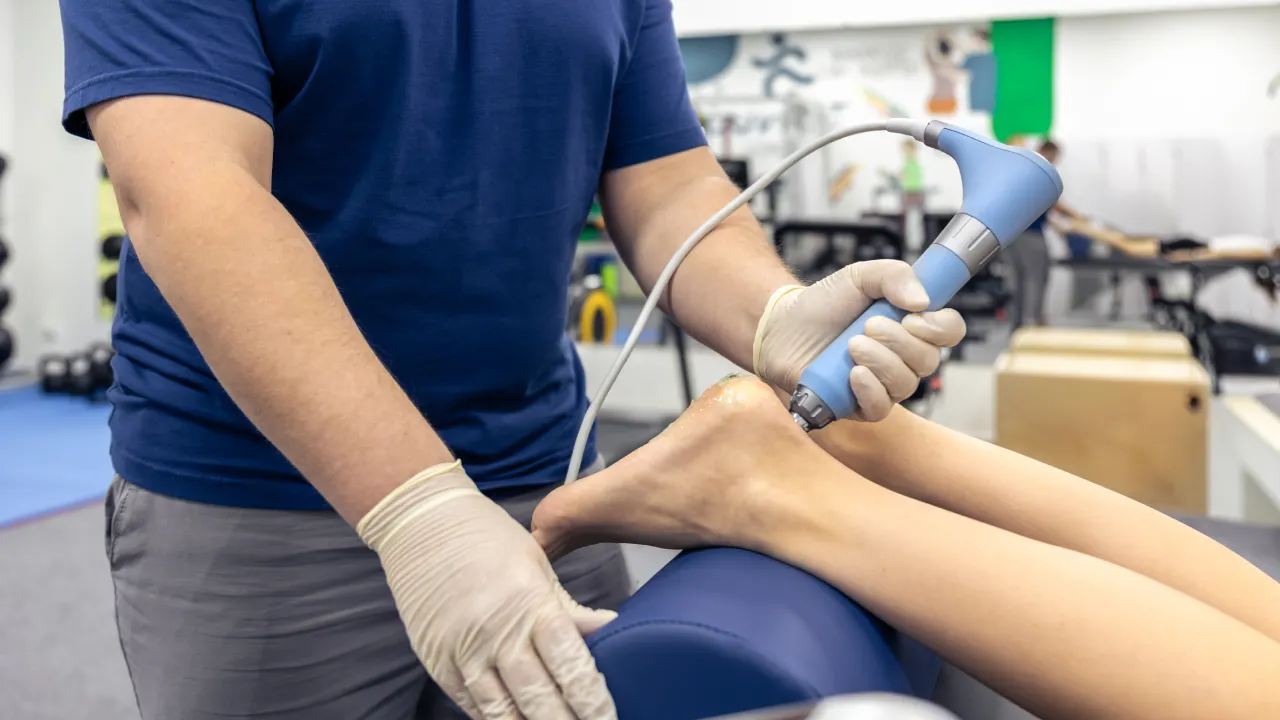
At The Port, the published treatment process includes an assessment, application of acoustic pulses to the target area, and follow-up care. Sessions are generally listed as 10–15 minutes, while the number and spacing of sessions depend on the clinical situation.
Many musculoskeletal conditions are managed through exercise, activity modification, manual therapy, education, and gradual loading. Some people continue to have symptoms even after trying several of these approaches.
If your progress has stalled, a Shockwave Therapy clinic may be worth discussing with your physiotherapist. The important question is whether there is a clear reason to use it for your diagnosis.
Research on shockwave therapy varies by condition, treatment protocol, and patient group. A clinical assessment can help determine whether the treatment fits your particular presentation.
Sometimes the biggest sign is uncertainty. You may have heard about shockwave therapy from a friend, read about it online, or seen it discussed in sports rehabilitation. But knowing whether it fits your symptoms requires more than matching your complaint to a list of conditions.
At a shockwave therapy clinic, ask whether your diagnosis has been established, why shockwave therapy is being considered, and how it fits with rehabilitation. You should also be able to ask about expected sensations, possible side effects, treatment frequency, and situations where the treatment should not be used.
The Port Physiotherapy & Massage states that screening is performed before treatment and that certain conditions can make shockwave therapy unsuitable, including some blood-clotting disorders, pregnancy, and tumours in the treatment area.
Shockwave therapy may help some people with selected musculoskeletal conditions, particularly certain persistent tendon and fascia problems. It should not be viewed as a universal treatment for every type of pain.
The therapy delivers acoustic pulses through the skin to a targeted area. The mechanical stimulus can influence local tissue and cellular activity. The exact biological response depends on the type of shockwave used, treatment settings, tissue involved, and the condition being treated.
A Shockwave Therapy clinic should therefore start with assessment. The clinician needs to determine whether the symptoms are consistent with a condition for which shockwave therapy may be considered. In some cases, another form of care may be more appropriate.
Before booking, consider these points:
Find out whether a registered physiotherapist or another appropriately trained clinician will assess you and deliver the treatment.
A provider should be willing to examine your symptoms and determine whether shockwave therapy is suitable rather than treating every complaint in the same way.
A shockwave therapy clinic may treat conditions such as tendon pain, plantar fasciitis, and other musculoskeletal problems. Look for clear information about the musculoskeletal conditions they address and whether your symptoms fit those categories.
Shockwave therapy may be used alongside exercise, movement retraining, manual therapy, or activity modification. Ask how the treatment fits into rehabilitation rather than viewing it as an isolated procedure.
A provider should discuss relevant health factors, contraindications, treatment-area concerns, and any precautions that apply to you.
Knowing whether temporary soreness is expected and whether activity needs to be modified can help you plan around appointments.
The Port Physiotherapy & Massage is located at 4250 109 Ave NE, Unit 3130, Calgary, Alberta, and lists hours from Monday through Saturday, 8 AM to 8 PM.
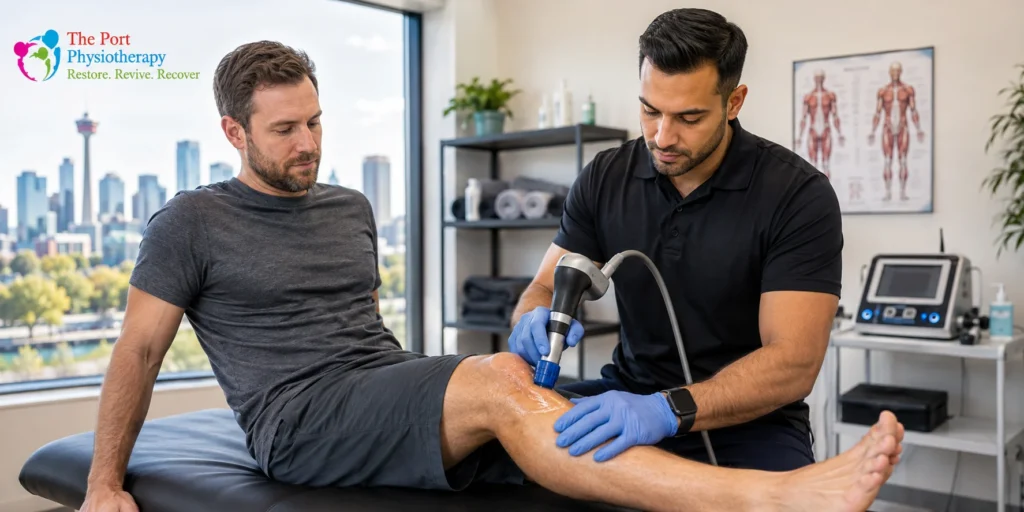
Your first visit should focus on figuring out what is happening and whether shockwave therapy makes sense for your symptoms. At The Port, the published treatment process includes a physical assessment, application of conductive gel, and use of an applicator to deliver acoustic pulses to the target area. Sessions are generally listed as 10–15 minutes, while the number and spacing of sessions depend on the clinical situation.
Persistent musculoskeletal symptoms deserve a clear assessment, especially when they keep returning or interfere with work, exercise, walking, or sport. Shockwave therapy may be considered for selected conditions, but it is not appropriate for everyone.
If you are in Calgary and wondering whether shockwave therapy is relevant to your symptoms, a consultation at The Port can be a practical starting point. The team can assess the problem, discuss available treatment options, and determine whether shockwave therapy belongs in the plan.
The number varies according to the condition, severity, response, and clinical findings. The Port states that many people complete around three to five sessions, commonly spaced about one week apart.
The treatment can feel like rapid tapping or pulsing, and some people find the sensation uncomfortable. Treatment intensity can be adjusted according to tolerance. Temporary aching or soreness may occur afterward.
No. Shockwave therapy is mainly discussed for selected musculoskeletal problems, particularly certain tendon, fascia, and calcific conditions. An assessment is needed to determine whether it fits the cause of your symptoms.
Activity recommendations depend on the condition and treatment area. The Port advises avoiding high-impact activity for roughly 24–48 hours after a session, with specific instructions based on the individual case.
No. Some medical circumstances can make it unsuitable. Screening is important before treatment, particularly where there are relevant blood-clotting conditions, pregnancy, tumours in the treatment area, or other contraindications. Discuss your health history with the clinician before treatment.
If persistent tendon, heel, elbow, shoulder, knee, or other musculoskeletal symptoms are affecting your routine, contact The Port Physiotherapy & Massage in Calgary to arrange an assessment.
Contact us (403) 567-0189 or visit 4250 109 Ave NE, Unit 3130, Calgary, AB T3N 1M7.