
5 Tips for Safe Pre- and Post-Natal Pregnancy Care
- Thu Sep 17

Pain that refuses to settle can affect work, sports, daily tasks, and sleep. Many people try stretching, rest, or home care before deciding to visit a shockwave therapy clinic. One of the first questions they ask is, “How many sessions will I need?”
The answer depends on several factors, including the condition being treated, how long the pain has been present, your activity level, and how your body responds during care. While every person is different, most people follow a treatment plan that provides steady progress over several appointments rather than expecting changes after a single visit.
At The Port Physiotherapy in Calgary, AB, the focus is on identifying the source of pain and creating a practical treatment plan that matches your goals. Knowing what influences the number of sessions can help you begin treatment with realistic expectations.
No two injuries are exactly alike. Even when two people have the same diagnosis, they may recover at different rates because of lifestyle, age, tissue health, and the demands they place on their bodies.
When you visit a shockwave therapy clinic, your physiotherapist will evaluate factors such as the following:
Someone with a recent overuse injury may progress faster than a person who has lived with chronic tendon pain for several years.
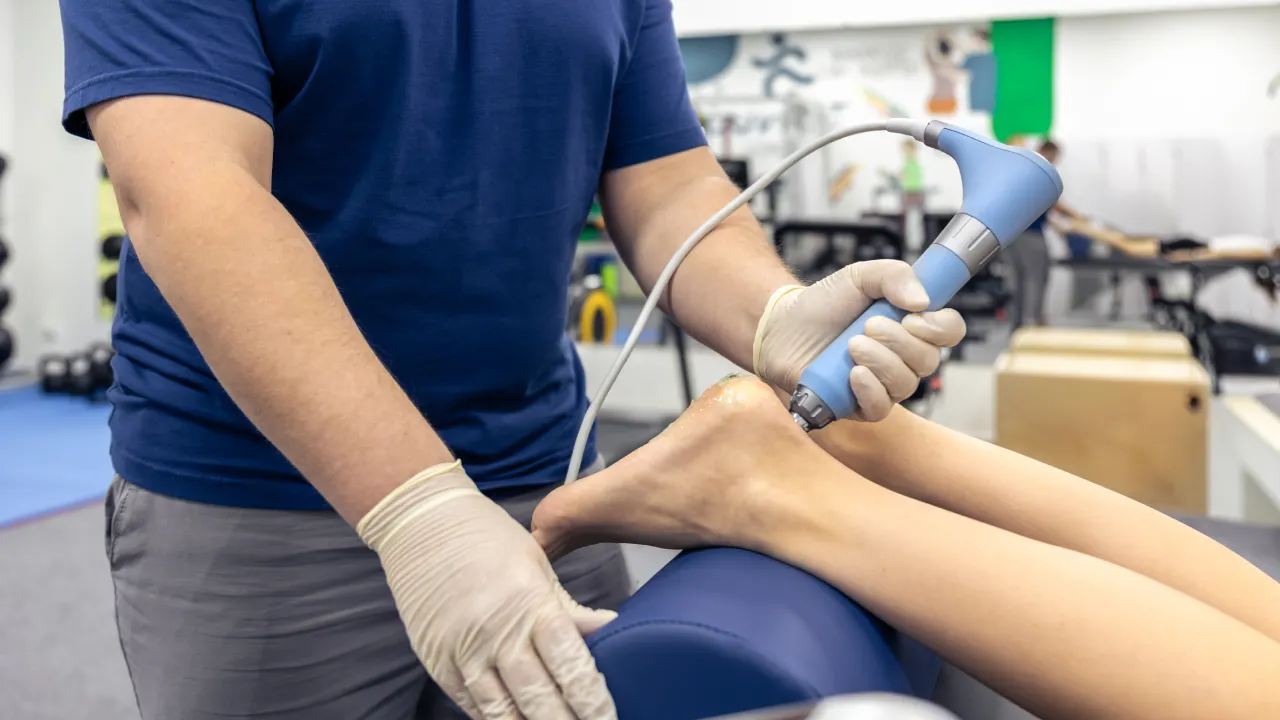
Shockwave therapy uses acoustic waves that travel through the affected tissue. These waves stimulate the body’s natural repair processes while helping improve circulation and tissue activity in the targeted area.
Physiotherapists often use this treatment for musculoskeletal conditions involving tendons, ligaments, muscles, and fascia. The procedure usually lasts only a few minutes and is commonly combined with movement-based rehabilitation instead of being used on its own.
At The Port Physiotherapy, treatment plans may also include exercise, mobility work, strength training, and education to support steady progress.
Many people visit a shockwave therapy clinic for conditions such as
Because each condition affects different tissues, treatment schedules often differ.
Although every case is unique, many treatment plans fall within these general ranges.
If symptoms have only been present for a short period, many people begin noticing progress within three to five sessions.
These cases often respond more quickly because the tissues have not undergone long-term changes.
Pain that has lasted several months or even years may require six to ten sessions.
Long-standing tendon conditions usually need additional time because tissue adaptation happens gradually.
Athletes often continue treatment while remaining active. The number of appointments depends on:
The physiotherapist may adjust the schedule as activity levels change.
Some people have more than one contributing factor, such as muscle weakness, movement restrictions, and tendon irritation. These situations often require additional sessions because each issue must be addressed throughout the rehabilitation process.
Every appointment builds on the progress from previous visits.
A session may include:
Monitoring progress at each visit allows your physiotherapist to adjust the plan when needed.
Several factors affect how many appointments you may require.
Pain that has existed for weeks often improves more quickly than pain that has persisted for years.
Exercises performed between appointments help strengthen tissues and improve movement. Following the recommended programme often supports steady improvement.
Continuing activities that repeatedly overload the injured tissue may slow progress.
Your physiotherapist can suggest temporary activity changes while allowing you to remain active whenever possible.
General fitness, sleep quality, stress, and nutrition all influence tissue recovery.
Small lifestyle adjustments can contribute to consistent progress throughout treatment.
Some people notice changes after the first appointment, while others require several visits before meaningful progress becomes noticeable.
It is also common for the treated area to feel mildly sore for a day or two after treatment. This temporary response usually settles naturally.
Recovery often happens gradually rather than all at once.
When visiting a shockwave therapy clinic, progress may appear in several ways before pain completely settles.
You may notice:
These improvements often indicate that tissues are adapting positively.
Shockwave therapy works most successfully when combined with an active rehabilitation programme.
Exercises help:
This combination addresses both symptoms and the movement patterns that may contribute to recurring pain.
If symptoms improve faster than expected, your physiotherapist may reduce the number of appointments.
On the other hand, if recovery progresses more slowly, additional sessions may be recommended based on your response.
Regular reassessments help determine the right direction throughout your care.
Selecting a clinic involves more than looking at the equipment being used.
Consider whether the clinic provides:
These elements help create a structured rehabilitation process from beginning to end.
Residents throughout Calgary, AB, often seek physiotherapy that focuses not only on reducing symptoms but also on restoring comfortable movement for work, recreation, and everyday activities.
At The Port Physiotherapy, every treatment plan begins with a detailed assessment of your condition, movement, and goals.
Whether you’re dealing with plantar fasciitis, shoulder pain, tennis elbow, or another tendon condition, the clinic focuses on helping you move with greater confidence through evidence-informed physiotherapy and structured rehabilitation.
Located in Calgary, AB, The Port Physiotherapy combines shockwave therapy with exercise programmes, movement correction, and ongoing reassessments so your care continues to match your progress.
The number of appointments you’ll need depends on your condition, how long you’ve had symptoms, your activity level, and how consistently you follow your rehabilitation plan. Many people begin with three to six sessions, while others with long-standing tendon conditions may require additional visits.
If you’re considering a shockwave therapy clinic, an assessment is the most reliable way to determine the right treatment schedule for your specific needs.
If persistent pain is limiting your daily activities, contact The Port Physiotherapy in Calgary, AB, to discuss whether shockwave therapy is appropriate for your condition. A detailed assessment can help determine how many sessions you may need and outline a practical treatment plan.
Location: https://maps.app.goo.gl/Nb8fw3hyQgmsimz79
Take the first step by booking an appointment with The Port Physiotherapy and learn how a shockwave therapy clinic can support your recovery.